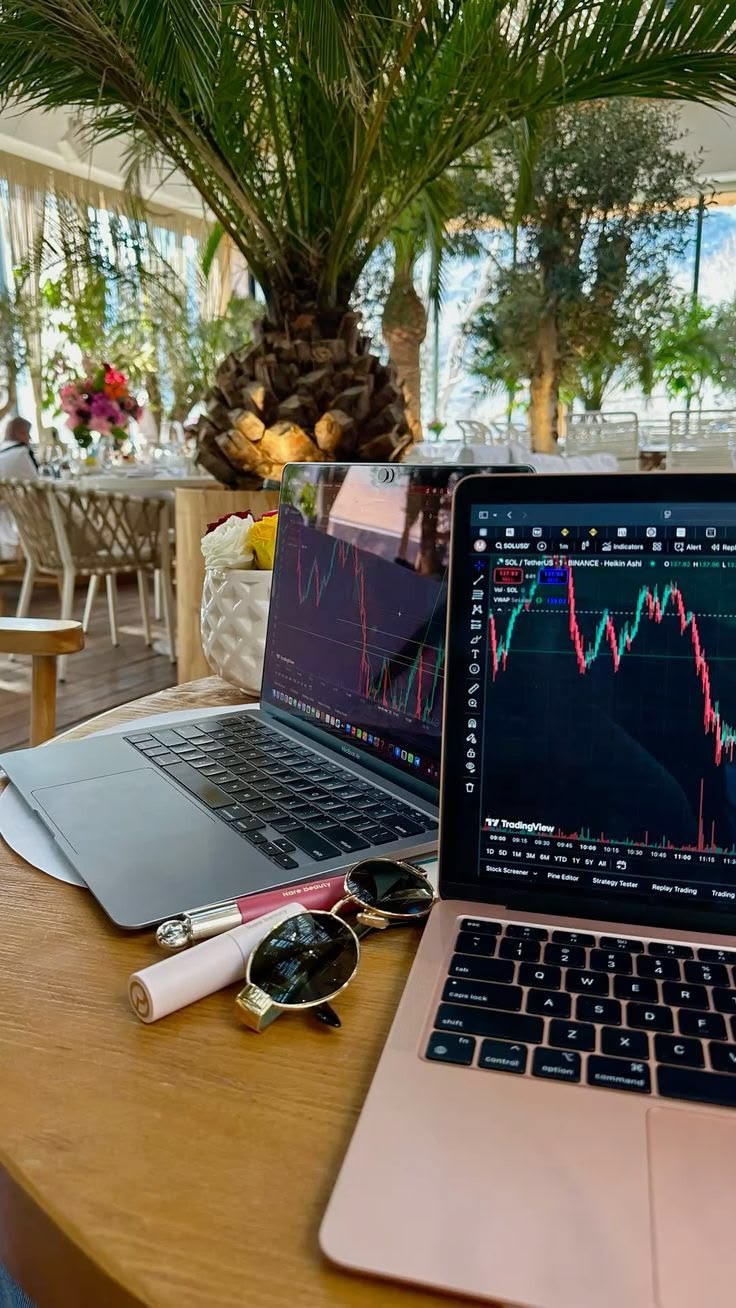
Introduction to
Forex Trading
Everything you need to know to get started
“The mark of a well-educated person is not necessarily in knowing all the answers, but in knowing where to find them.”— Douglas Everett
What’s in This Guide
What is Forex?
The foreign exchange market is the world’s largest and most liquid financial market — and it never truly closes.
If you’ve ever travelled abroad and swapped your home currency for another, you’ve already taken part in forex trading. In the financial markets, it works the same way — except traders are doing it deliberately, at scale, to generate profit or to protect other investments from currency risk.
An estimated USD 5 trillion is traded every single day, with the vast majority of that being speculative. Because trading happens directly between participants around the globe, there’s no central exchange and no formal opening bell — the market runs continuously.
Forex runs from Sunday 22:00 GMT all the way through to Friday 22:00 GMT, following the trading day across Sydney, Tokyo, London and New York in turn.
Over time, every trader develops their own style. Some prefer the high-volume major pairs; others focus on exotic currencies or commodity-linked pairs. There’s no single right approach — just the one that suits your strengths.
What Affects the Forex Market?
Currency prices are driven by expectations — and those expectations are shaped by a huge variety of factors.
Different participants enter the market with different goals. Companies hedge their currency exposure to protect profits. Fundamental traders analyse the big economic picture. Technical traders look purely at price patterns. And central banks, hedge funds and financial institutions all bring their own agendas to the table.
Because so many different players are involved, the market responds to a wide range of information — from interest rate announcements to election results to natural disasters. One of the great things about forex is that you can profit in both rising and falling markets.
Central Banks
The most powerful players. They set interest rates and monetary policy, and can intervene directly in currency markets.
Financial Institutions
Commercial banks, investment banks and hedge funds trading for clients or on their own account.
Corporations
Multinationals converting revenues, paying suppliers, or hedging against unfavourable exchange rate moves.
Individual Traders
Retail participants — like you — speculating on currency movements using leveraged trading platforms.
How a Forex Trade Works
Every forex trade involves exactly two currencies — a base currency and a quote currency.
You’re always buying one currency and simultaneously selling another. The base currency (left) is the one you’re buying or selling; the quote currency (right) tells you the price.
Margin
The deposit your broker requires to open a leveraged position. A 3.33% margin requirement means you can control positions 30× larger than your deposit. Leverage amplifies both gains and losses.
Lot Size
Trades are measured in lots. A standard lot equals 100,000 units of the base currency. Smaller sizes — mini (10,000) and micro (1,000) lots — let you trade with less capital.
| Name | Input on Platform | Units of Base Currency |
|---|---|---|
| Standard Lot | 1.0 | 100,000 |
| Mini Lot | 0.1 | 10,000 |
| Micro Lot | 0.01 | 1,000 |
Bullish — Long
You think the currency will rise. You buy and take a long position. If you’re right, you sell at a higher price for a profit.
Bearish — Short
You think the currency will fall. You sell and take a short position. If you’re right, you buy back at a lower price for a profit.
Trading Strategies: Fundamental
Fundamental analysis means trading based on economic data, news, and the overall health of an economy.
The core idea is simple: if a country’s economy is doing well, demand for its currency tends to rise — and vice versa. Fundamental traders watch indicators like employment numbers, inflation, GDP growth and central bank interest rate decisions to build a view on where a currency is heading.
Much of this data is released on a known schedule, so you can prepare in advance. Trades can be short (opened and closed the same day around a major data release) or long-term (held for days or weeks based on a macro view). Positions held overnight are “rolled over” — closed at 22:00 GMT and immediately reopened at a price adjusted for the interest rate differential between the two currencies.
Key Indicators to Watch
Employment rate, inflation (CPI), GDP growth, consumer confidence, retail sales, and central bank interest rate decisions are all market-moving data points.
The Economic Calendar
A free tool (available on most trading platforms and finance sites) that lists upcoming data releases by country, date, and expected impact on the market.
The Carry Trade Strategy
A popular fundamental strategy: borrow in a low-interest-rate currency and invest in a high-interest-rate one, collecting the difference as profit.
Trading Strategies: Technical
Technical analysis means reading charts and using price patterns to decide when to buy or sell.
Instead of looking at economic data, technical traders focus entirely on price history. The theory is that all known information is already reflected in the price, and that price tends to move in recognisable patterns that repeat over time.
By looking at charts and weighing price, volume, volatility and timing, you can spot levels and formations that point to trading opportunities. Most modern platforms have dozens of built-in technical indicators to help with this.
Trading Platforms
A trading platform is the software you use to place trades, analyse charts and manage your account.
You access the forex market through a broker who provides you with a trading platform. When choosing a broker, compare spreads, available currency pairs, regulation, and the quality of their platform and support. Most regulated brokers offer a free demo account — always start there.
MetaTrader 4 (MT4)
The industry standard for retail forex trading. MT4 offers a clean charting interface, a huge library of built-in and community indicators, automated trading via Expert Advisors (EAs), and is supported by almost every forex broker worldwide. Ideal for beginners and experienced traders alike.
MetaTrader 5 (MT5)
The updated successor to MT4, with more timeframes, more order types, an economic calendar built in, and support for trading additional asset classes like stocks and futures. If your broker offers both, MT5 gives you more flexibility as you grow.
Both platforms are available as desktop applications, browser-based versions and mobile apps (iOS and Android). Whichever you choose, spend time in demo mode first — learn the order types, set up your charts, and test your strategies without risking real money.
What is a Spread?
The spread is the difference between the ask (buy) price and the bid (sell) price. It’s how most brokers make their money. Tighter spreads mean lower trading costs.
What is a Pip?
A pip is the standard unit of price movement in forex. It’s the fourth decimal place for most pairs — or the second decimal place for JPY pairs.
The highlighted digit is the pip position.
How to Start Trading Forex
Getting started is simpler than most people expect — and you can practise for free before risking a single penny.
Learn the Basics
You’re already doing this! Work through guides like this one, watch beginner videos, and get comfortable with key concepts — pairs, pips, leverage and order types — before opening any account.
Choose a Regulated Broker
Look for a broker regulated by a recognised authority (FCA in the UK, ASIC in Australia, CySEC in Europe). Compare spreads, minimum deposits, available platforms and customer reviews.
Open a Demo Account
Almost every broker offers a free demo account loaded with virtual funds — typically USD 10,000–100,000. Use it to practise placing trades, test your strategies and learn the platform. No risk whatsoever.
Start Small with Real Money
Once you’re consistently profitable on demo, consider opening a live account with a small amount you can afford to lose. Trade micro lots at first, keep a trading journal, and focus on process over profit.
Leave a Reply